ServicesFlat Roofing
Flat Roofing in Litchfield Park
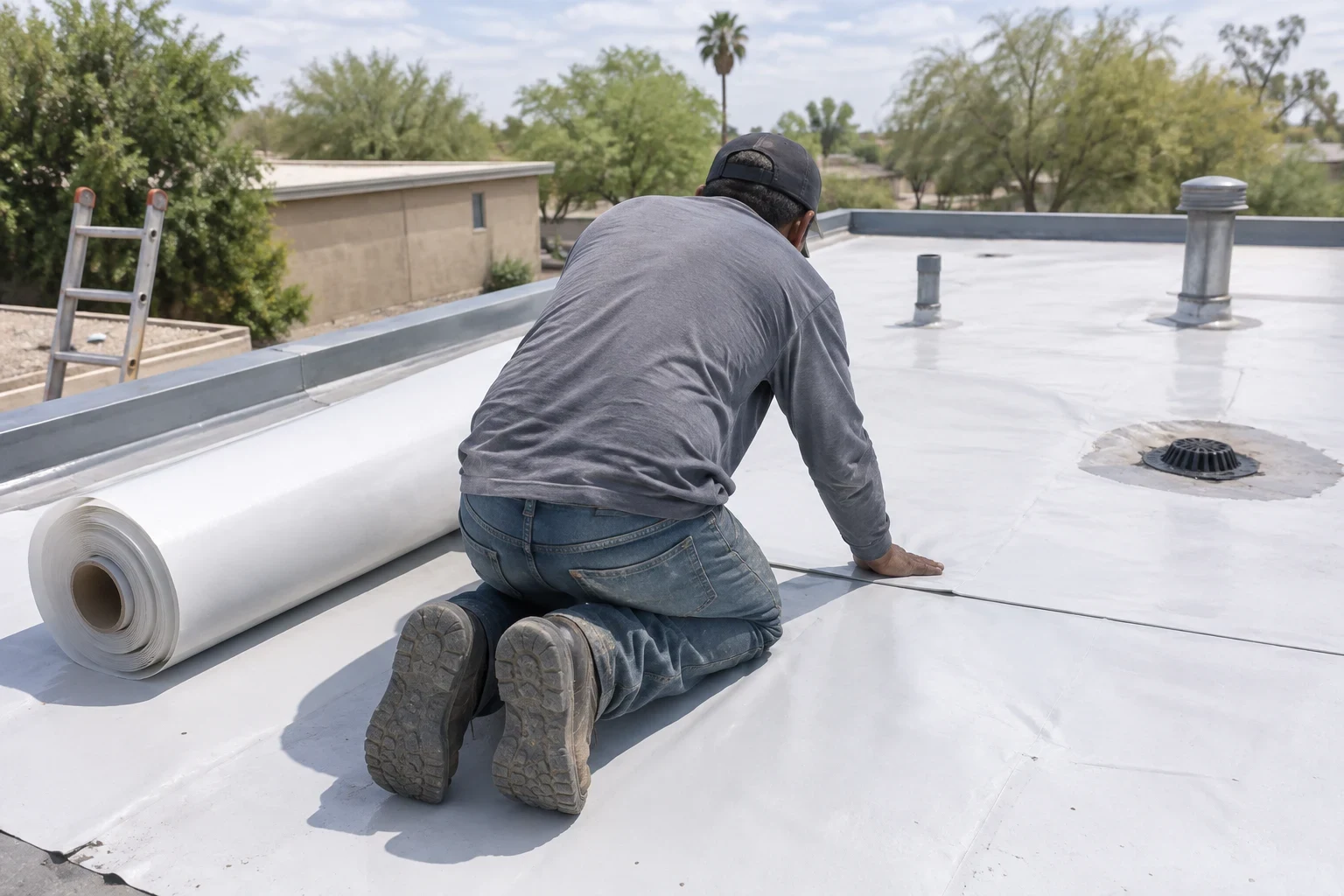
We repair and replace low-slope roofs on parapet homes, additions and patio covers. Before any work starts, you see pictures of the membrane, the seams and the drains, so the plan makes sense. When we finish, you see the completed roof too.
Low-slope roofs need different materials and more care
A flat roof is never truly flat. It needs a slight pitch so water reaches the scuppers or drains. Water that sits in one spot slowly breaks down even a good membrane. Most of the flat roof problems we see come from drainage, tired seams or a coating that was never renewed.
We work with modified bitumen, TPO single-ply and elastomeric coatings. Each one behaves differently under strong sun. Modified bitumen is tough and forgiving around penetrations. TPO reflects heat and welds into continuous seams. When the membrane underneath is still intact, a fresh coating renews its UV layer without a tear-off. Some roofs suit spray foam better, and our foam roofing page covers that option.
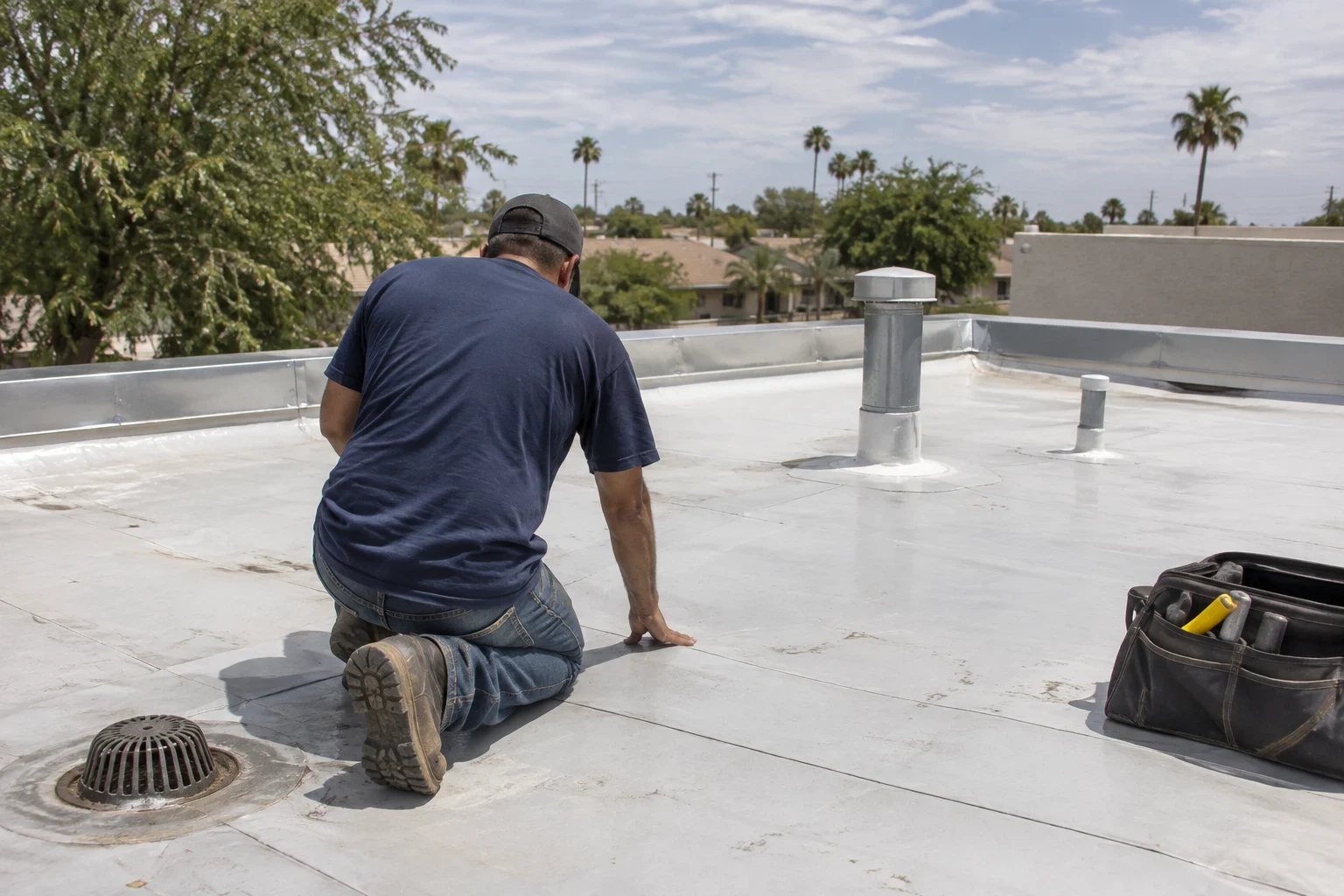
Each visit is recorded in photos. You see the cracked flashing, the soft spot near the AC curb or the blistered cap sheet for yourself, then decide how to proceed.
What our flat roofing work covers
Membrane replacement
We tear off the worn system down to the deck and install new modified bitumen or TPO. Seams are lapped and sealed, or heat-welded, and checked along their full length.
Deck and substrate repair
Sheathing that has taken on water gets cut out and replaced before anything new goes down. We document the damaged section first so you can see why it had to go.
Drainage corrections
Low spots that hold water are built up with tapered insulation or crickets so runoff moves toward the scuppers. Rebuilding the slope is often what makes a new membrane last.
Parapet and penetration flashing
Parapet walls, AC stands, vent pipes and skylight curbs are where most leaks start. We reflash them in material that matches the new roof.
Reflective coatings
On a sound membrane, a reflective elastomeric coating protects against UV and helps keep the rooms below cooler.
When a flat roof is asking for repair
- Puddles that linger
- Water still sitting on the surface two days after a storm has no path off the roof. The cause is usually settled framing or a clogged scupper or drain.
- Bubbles in the membrane
- Raised pockets mean moisture or air is trapped under the surface. Summer heat makes them swell until they crack open.
- Cracked or powdery finish
- A pattern of fine cracks, or a surface that rubs off like chalk, shows the UV layer is gone. The membrane beneath it will start breaking down next.
- Ceiling stains inside
- A brown ring below an addition or patio cover often starts at a seam or flashing some distance away. Water runs along the deck before it drips through.
- Laps pulling away
- Seams opening along a parapet or around an AC curb let water spread beneath the entire roof rather than staying in one place.
How a flat roof job runs
- 1
Phone call and site visit
You tell us what you have noticed. We come out, walk the roof and take pictures of the membrane, seams, drains and flashing.
- 2
Written estimate with photos
You get a line-item estimate along with the photos. It shows whether repair, a coating or full replacement fits the roof, and why.
- 3
Tear-off and deck work
We protect the landscaping and walls, remove the old roof and record the bare deck. Any rotted sheathing is replaced before we continue.
- 4
Installation and flashing
Tapered insulation, membrane and flashing go on in sequence, and we document each stage. Seams are checked before we call the roof done.
- 5
Cleanup and final review
We clear debris and sweep the yard for fasteners. You get a closing set of photos showing the finished roof and drains.
What moves the price of flat roof work
Two things set the number: what is on the roof today and what the new system needs to handle. Every part of the job is listed separately in your written estimate, so you can see where the money goes. We price the work after we have been on the roof and photographed it.
- Roof size and how we reach it
- More square footage means more membrane and insulation. A roof that is awkward to reach from the driveway takes extra labor to stage materials and haul debris away.
- Layers already in place
- Older homes sometimes carry one roof system laid over another. When that happens, both come off before new work begins.
- What the deck looks like
- Sheathing that turns out soft or rotted during tear-off adds material and hours. You see photos of the damaged boards before we replace them.
- Membrane type and slope correction
- TPO, modified bitumen and elastomeric coatings each carry a different cost. Adding tapered insulation to stop ponding raises both material and labor.
- Curbs, vents and parapet walls
- Each AC curb, vent pipe and length of parapet gets its own flashing detail. A roof crowded with equipment costs more than a clean, open one.
Flat roofing questions
- Is a coating enough, or does my flat roof need replacing?
- A coating is a good choice when the existing membrane is well bonded and the deck underneath is dry. It cannot repair soaked insulation or seams that have already opened. We share photos of what we find so you can weigh the options alongside us.
- Which membrane handles the desert heat best?
- TPO bounces back much of the sunlight, which keeps the surface and the rooms below cooler. Modified bitumen with a reflective cap sheet stands up well around penetrations and where people walk on the roof. We suggest a system based on how your roof is laid out, rather than using one product on every home.
- Should I plan to be home while you work?
- You do not need to stay for the whole job. We prefer to walk the roof with you at the start, or go over the photos together by phone, and then review the finished roof with you at the end.
- How many days does a flat roof replacement take?
- A small area, such as a one-room addition or a back patio cover, is usually finished in a single working day. A whole parapet roof often takes a few days, and longer if tear-off uncovers damaged decking. We give you the expected schedule before the work begins.
- Who takes care of the permit?
- If the city requires a permit for your job, we pull it and book the city's inspection as part of the work. You do not have to deal with the paperwork yourself.
See what is happening on your flat roof
Call to set up a visit. We will look over the membrane, seams and drains and walk you through your options. The estimate comes with the photos that back it up.