ServicesFoam Roofing
Foam Roofing in Litchfield Park
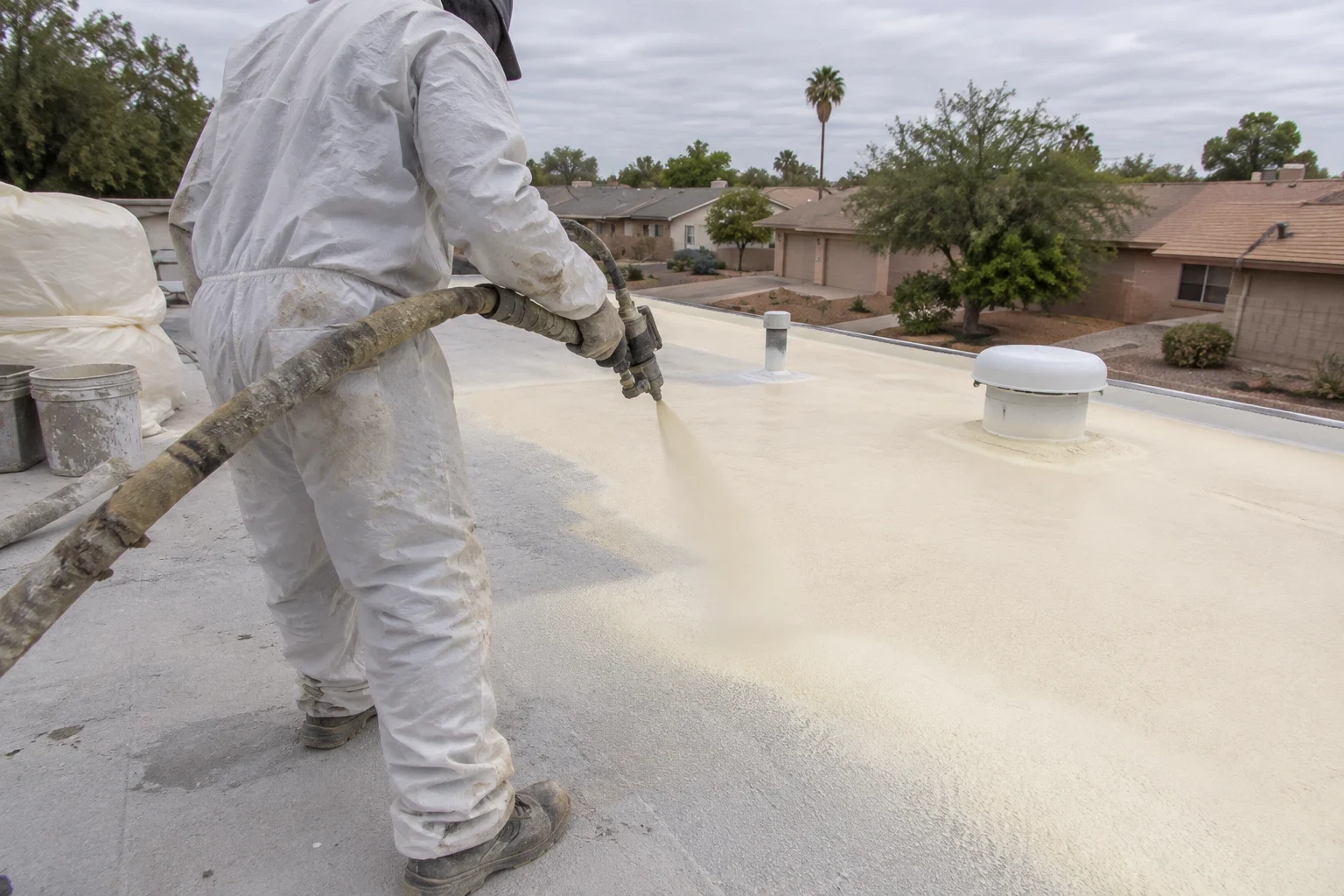
We spray new polyurethane foam roofs and recoat aging ones on the flat and low-slope sections of your home. You get photos of the surface we found, the foam going down and every coat that seals it, so you know exactly what is on your roof.
A roof sprayed in place, then sealed against the sun
Spray polyurethane foam comes from two components blended right at the nozzle. In a matter of seconds it expands into a rigid, closed-cell layer bonded to the deck below, forming one continuous surface with no seams or laps where water can find a way in. We can also add extra thickness over low spots, steering water toward the scuppers and drains instead of letting it sit.
Foam on its own does not stand up to sunlight. The elastomeric coating on top is what protects it, and through a long Arizona summer that coating does most of the work. Most foam roofs that leak did not fail because of the foam. The coating wore thin and was never renewed.
So we document each stage with photos. Before any work, you see the cracks, blisters or bare foam we found. Later you see the foam depth and each layer of coating as it goes on. If a recoat is all your roof needs, we say so plainly.
What the work includes
Cleaning and surface prep
We wash the roof, scrape away loose granules and failed coating, and let the surface dry completely. Coating and foam only bond well to a clean, dry roof.
Removing wet or damaged material
Saturated foam or old built-up roofing gets cut out and replaced. Trapped moisture under new foam turns into blisters, so we check before we spray and show you what came out.
Foam sprayed to a measured thickness
We build the foam up evenly, add slope where water has been pooling, and probe it to confirm depth. We note those readings for you, area by area.
Coating in separate passes
We apply acrylic or silicone coating in a base coat and a top coat, often in two contrasting colors so full coverage is easy to see. Granules can be added along walkways and around equipment.
Detail at edges and equipment
Parapet walls, scuppers, plumbing vents and the curbs under rooftop AC units or coolers get the closest attention, since that is where most foam roofs start to leak.
Protecting your home, then cleanup
We mask stucco, windows and trim, cover vehicles, and stop spraying when the wind picks up. When we leave, the debris and masking leave with us.
Signs your foam roof needs attention
- Orange or tan foam showing
- When the coating wears through, bare foam turns chalky and powdery in the sun. At that point it is losing material, and a recoat soon can save a full replacement later.
- Bubbles or spongy patches
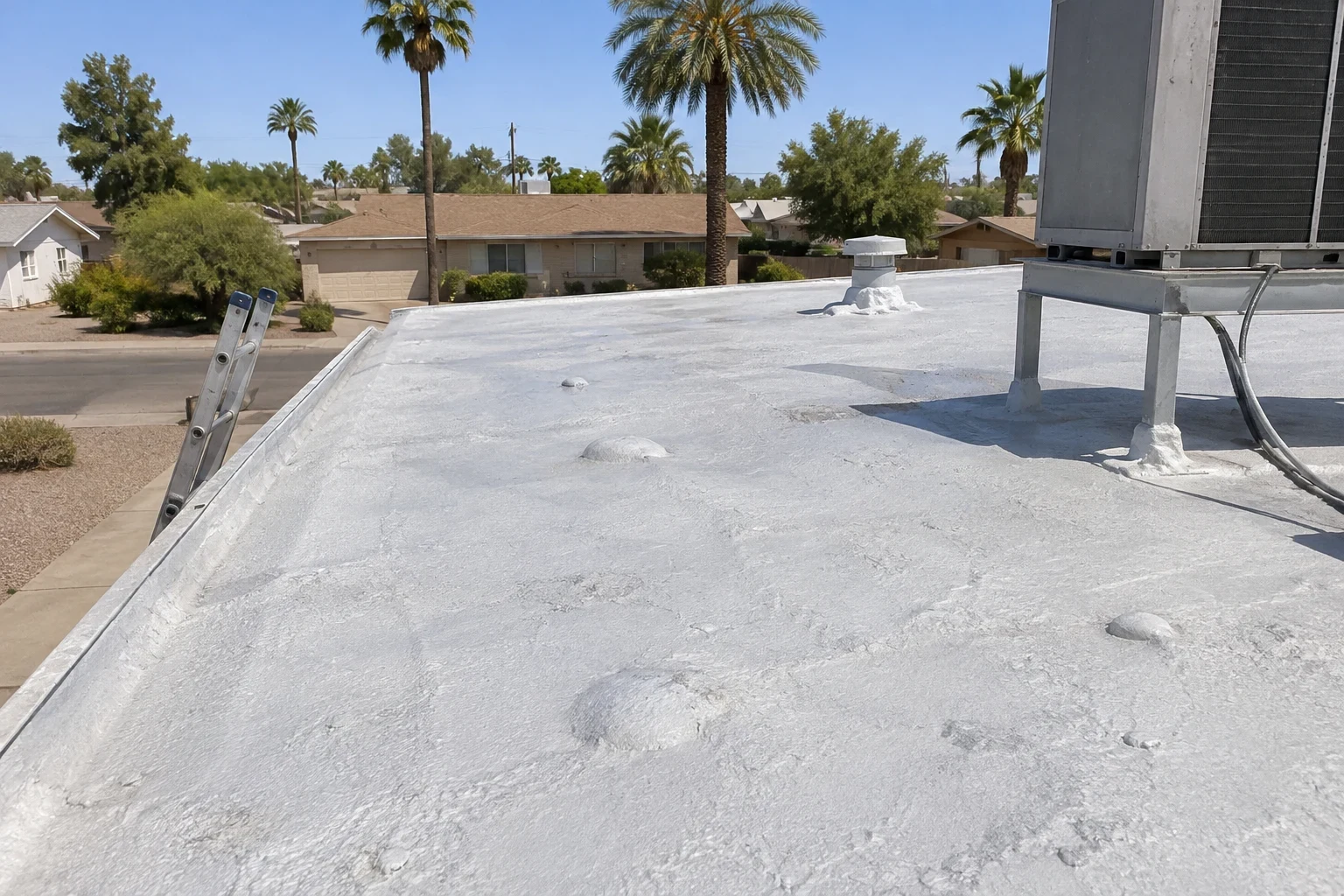
- A raised dome in the coating, or a patch that gives a little when you step on it, usually points to trapped moisture or foam that has let go of the deck.
- Water standing after rain
- Puddles that last more than a day or two break down coating faster and point to low spots that need more foam.
- Small pecked holes
- Birds sometimes peck at foam, leaving pits that let water in. They are easy to miss from the ground.
- Cracked, checked coating
- A pattern like dried mud means the coating has gone brittle and is no longer stretching with the roof as it heats and cools.
- Stains on the ceiling below
- A water mark under a flat section of your home is often the first sign anything is wrong up top.
How a foam roofing job runs
- 1
A phone call, then a visit
We talk through what you have noticed and set a time to come out. On the roof we check for moisture, measure the area and record what we see.
- 2
A written estimate with photos
You get a line-item estimate alongside photos of what we found. It spells out whether a recoat will do or new foam is needed, and why.
- 3
Prep day
We wash and dry the roof, mask the house and cars, and remove any wet material. The cleaned surface is recorded before anything new goes on.
- 4
Spraying and coating
We start early to work within safe temperature and wind limits. Foam goes down first, then the base coat, with the top coat after it cures.
- 5
Final walk and photo set
We walk the finished roof, check edges and drains, and hand you the full set of images with thickness readings. Then we clean up.
What moves the cost of a foam roof
We price a foam roof only after we have measured it and checked its condition, so there are no numbers until we have been up there. Your written estimate breaks the job into separate lines. These are the things that usually make the biggest difference.
- Recoat or new foam
- A recoat over sound foam is a much smaller job than spraying a new roof. Catching worn coating early keeps you on the lighter side of that line.
- What is underneath
- Wet foam, old built-up layers or soft decking have to be removed and repaired before new foam goes down, which adds time and material.
- Coating choice and thickness
- Acrylic and silicone coatings cost differently, and more coats or a thicker build lasts longer between recoats. We explain the tradeoff on your roof.
- Size, slope work and equipment
- Square footage matters, as does how much foam it takes to correct low spots and how many AC stands, vents and parapets need detail work.
- Permits
- A full new foam roof may need a permit where a recoat often does not. When one is required, we pull it and include it in the estimate.
Foam roofing questions
- Can foam go over my existing flat roof?
- Often, yes. Foam can be sprayed over a sound, dry built-up or older foam roof, which avoids a full tear-off. Any wet or loose areas have to come out first, and we point those spots out to you before we remove them.
- How often does a foam roof need recoating?
- There is no fixed schedule. Coating type, the thickness it went on at and how much direct sun the roof gets all change the timing. The real signal is coating that has worn thin or started to chalk, not a date on the calendar. Once we have been on your roof, we can tell you how much life the current coat has left.
- Is foam the right choice, or should I look at another flat roof system?
- Foam works well on low-slope roofs with ponding problems or lots of rooftop equipment, because it can be shaped to drain and wraps around curbs without seams. For some roofs a membrane or other system makes more sense. Our Flat Roofing page covers those options, and we will tell you which fits your home.
- Will foot traffic damage a foam roof?
- Occasional trips across it, such as swapping an AC filter or servicing a cooler, are fine. Repeated traffic along the same route wears the coating down faster. We can embed granules in the top coat along the paths you or a technician use most.
- What about overspray on my car or the neighbors' property?
- We mask the house, cover vehicles nearby and watch the wind closely. If it gusts past a safe level, we stop spraying and pick back up when it settles.
See what is really on your roof
Tell us what you have noticed on the flat part of your home. We will come out, photograph what we find and give you a clear, written answer on recoating or new foam.