ServicesRoof Replacement
Roof Replacement in Litchfield Park
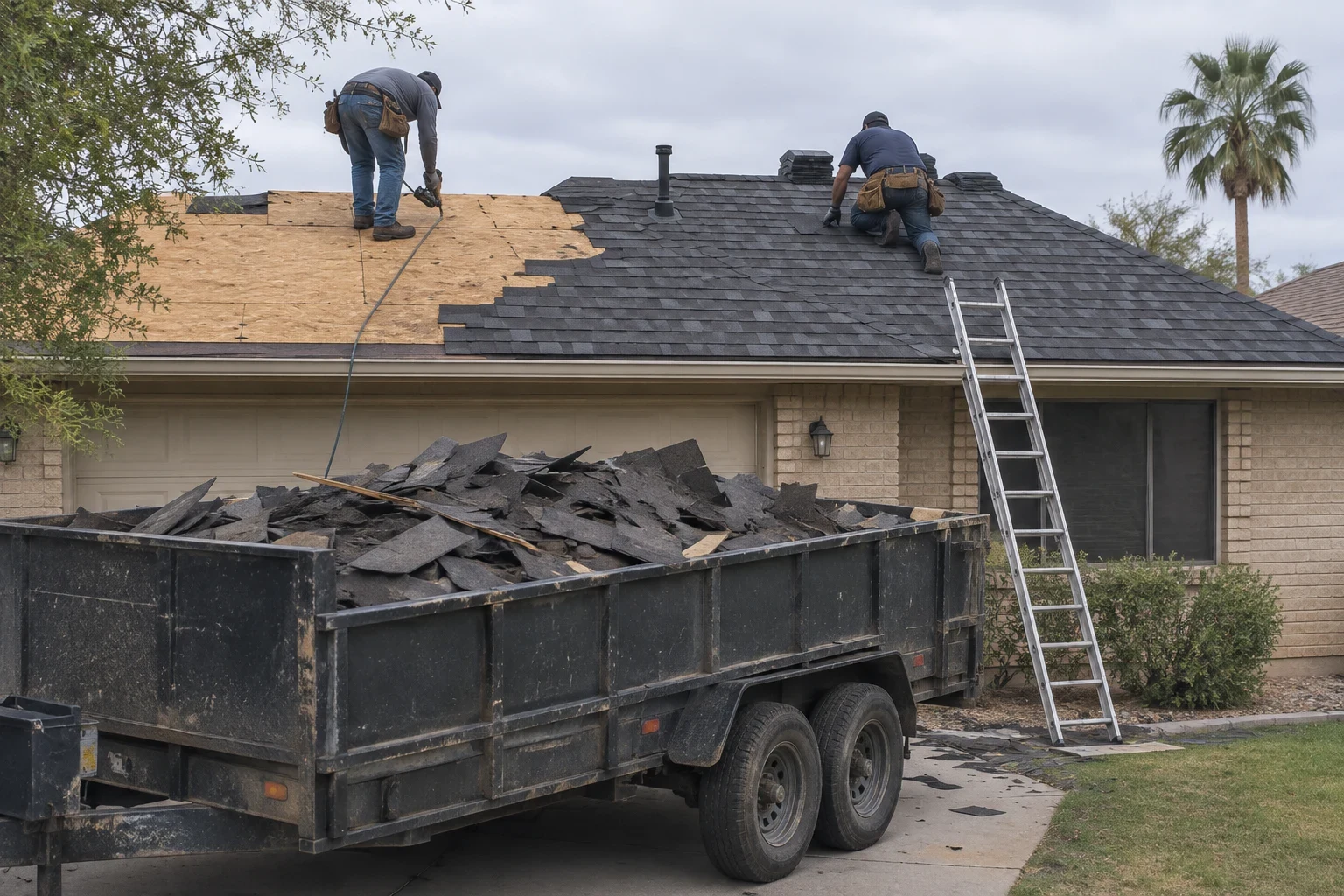
When patching no longer keeps water out, we strip the worn roof off completely and rebuild on a sound deck in tile, shingle or foam. You get a written estimate, a tidy site at the end of each day, and photos of what sat under the old roof and how we put it right.
When a new roof is the better answer
A roof can usually be patched more than once. Replacing it is the right call when the water barrier has given out across the whole surface rather than in one spot. Under concrete tile, that barrier is the underlayment, and in desert sun it dries, cracks and stops shedding water long before the tile looks tired from the street. On shingles, the signs are bare granules, brittle tabs and leaks that wander from room to room.
We give you a straight answer on which side of that line your roof sits. If roof repair will carry you for several more good years, we say so and recommend that smaller job.
With the old covering off, we record the bare deck before anything new is laid on it. You see the boards, the soft spots and each repair, so nothing is hidden beneath your new roof.
What the work covers
Removal down to bare sheathing
The old covering, underlayment and fasteners all come off. Laying new material over old would hide the very problems we are there to find.
Sheathing repairs
Any board that is delaminated, stained or soft is cut out and replaced. Each one is photographed and noted by location so it matches your final invoice.
Fresh underlayment and metal
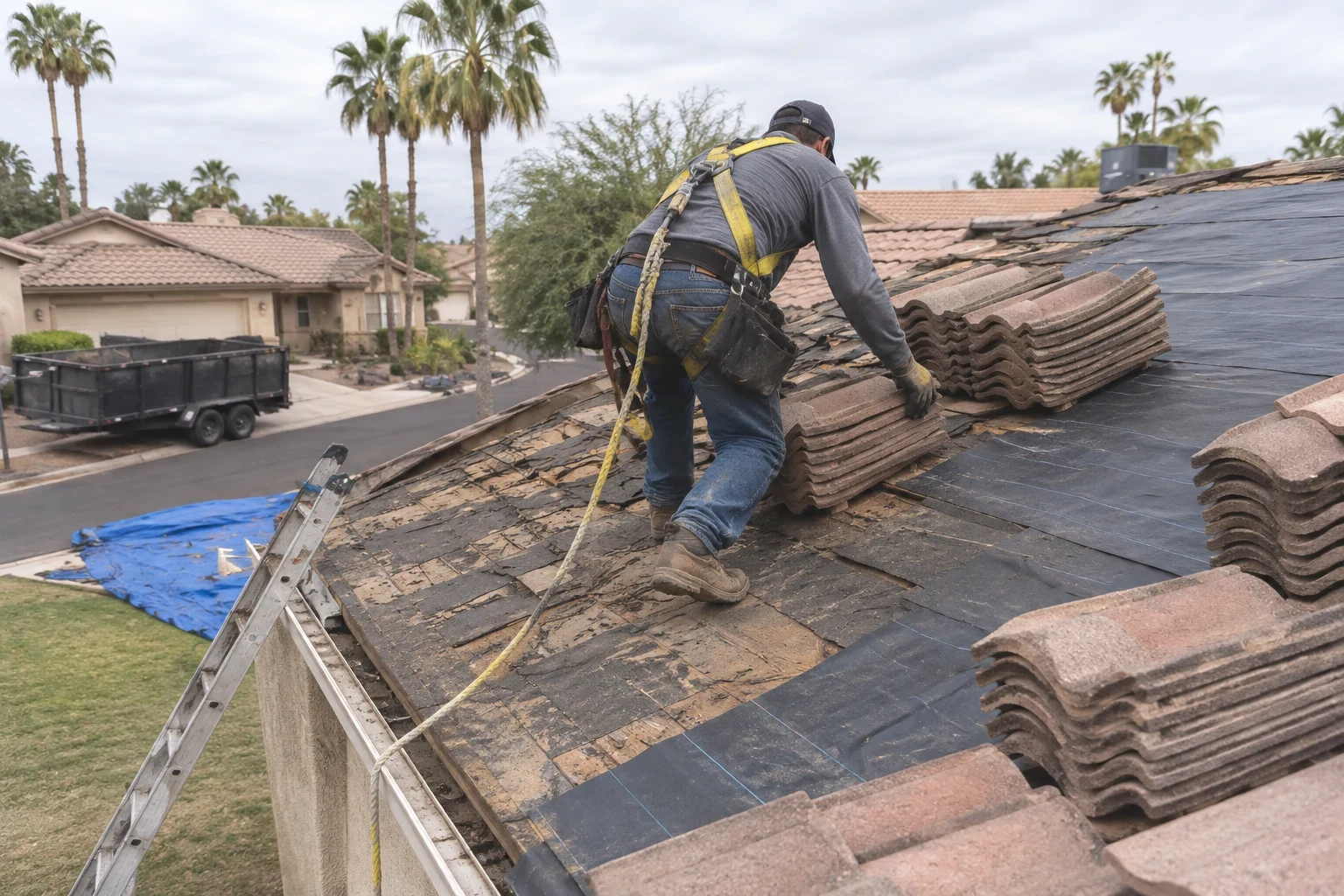
A heat-rated underlayment goes down first, followed by new flashing at walls, valleys, chimneys and every penetration. We do not reuse old flashing, since tired metal is where many leaks start.
Tile, shingle or foam
We replace roofs in concrete or clay tile, architectural shingle, and sprayed foam on low-slope sections. Our Tile Roofing, Shingle Roofing and Foam Roofing pages explain how each one holds up in desert heat.
Vents and finishing details
Pipe boots, vents and ridge pieces are fitted to suit the new system, helping the attic shed heat so the materials do not age early.
Clean grounds and a full photo record
We clear debris at the close of each workday and pull a rolling magnet across the lawn, planting beds and drive to catch stray nails. When the job is done, you receive photos running from tear-off to the finished ridge.
When replacement starts to make sense
- Stains in several rooms
- A single drip by a vent is usually a repair job. Water marks showing up in different rooms, or coming back after a fix, point to underlayment that is failing across the roof.
- Original felt under aging tile
- Tile often outlives the layer beneath it by years. A tile roof in its second or third decade still sitting on its first underlayment deserves a careful look.
- Shingles losing their surface
- Tabs that snap when lifted, edges that curl and granules collecting where water drains all mean the sun has worn away the protective layer.
- A deck that gives
- Spongy spots underfoot or a dip in the roofline usually mean moisture has reached the wood.
- Foam that holds water
- When foam has lost its coating, cracked deeply or blistered and stays wet, a recoat may not be enough because the foam itself is saturated.
How the job unfolds
- 1
Roof and attic visit
We walk the roof and look into the attic where it is reachable, capturing worn areas, flashing and any water marks in the wood. You see those images before we discuss price.
- 2
Written estimate, line by line
Tear-off, underlayment, flashing, finish material and the per-board price for any sheathing we replace are each listed. You will not find a vague lump sum.
- 3
Permit and start date
We apply for the building permit and agree on a start date with you. In summer we begin at first light so materials are handled before the deck gets hot.
- 4
Strip, document, build
Once the old roof is off, the bare deck is photographed before any repair starts. Then underlayment, flashing and the new finish go on, with tarps and ground covers shielding your plants and walls.
- 5
Final inspection and handover
When the inspector has approved the work, we tour the finished roof with you, clear the last of the debris and pass along the full set of images.
What shapes the cost of a replacement
Your price comes from your own roof, measured and photographed, not from a chart. A few things move the number more than others, and the written estimate explains each one. Sheathing damage is the single item we cannot fully see until tear-off, so we show it to you and price it the same way on every job.
- Roof area and slope
- More square footage means more material on the truck and more labor time on the roof. A steep pitch means crews work tethered and move with more care, which adds hours.
- Choice of finish
- Tile, shingle and foam differ in material cost, weight and installation time. On some tile roofs, relaying sound tile brings the total down.
- Condition of the deck
- Solid sheathing goes straight to underlayment. Rotted or stained boards add replacement work, and you see them in photos before they appear on the bill.
- Layers to strip
- When two or more old layers are stacked on the roof, tear-off takes longer and there is more debris to haul away.
- Skylights, valleys and vents
- Every chimney, skylight, valley and pipe needs its own flashing, so a roof with many of them costs more than a plain one.
Replacement questions we hear often
- How long does a replacement usually run?
- On a typical single-story house, a shingle roof often wraps up in a few working days. Tile takes longer because each piece is lifted, stacked and then relaid or replaced. Your estimate includes a realistic schedule, and we tell you early if weather or deck repairs change it.
- Is it possible to keep my existing tile?
- Often it is. Sound concrete tile can be lifted with care, stacked on the roof and relaid over the new underlayment. We count the cracked or brittle pieces, show them to you and source matching replacements.
- Do I need to be home while you work?
- Not every day. Most people meet us at the start and again for the final walkthrough. In between, we share photos of the deck and any repairs as they come up, so you always know where the job stands.
- How do I know a replacement is really needed?
- Every recommendation we make comes with the photos behind it. If your roof can be repaired at a sensible cost, we tell you that and point you toward roof repair, even though it is the smaller job.
- Will the job need a permit?
- A full replacement generally calls for a building permit and a final inspection. We file the application and schedule the inspection, whether your home is in Litchfield Park or nearby in Goodyear or Avondale.
Know what is under your roof before you choose
It starts with a short phone conversation. We set a time to look over the roof, document what we find and go through it with you.