ServicesTile Roofing
Tile Roofing in Litchfield Park
Tile often outlasts what sits beneath it. We lift, repair and relay concrete and clay tile roofs, replace worn underlayment and flashing, and photograph each stage so you see the layers under your tile before anything goes back on.
What tile roofing work involves
A tile roof has two parts that age at very different speeds. The concrete or clay tile on top can last for decades. The underlayment beneath it, the layer that actually keeps water out, dries and cracks much sooner under months of desert sun. Most leaks we trace on tile roofs start there, not in the tile itself.
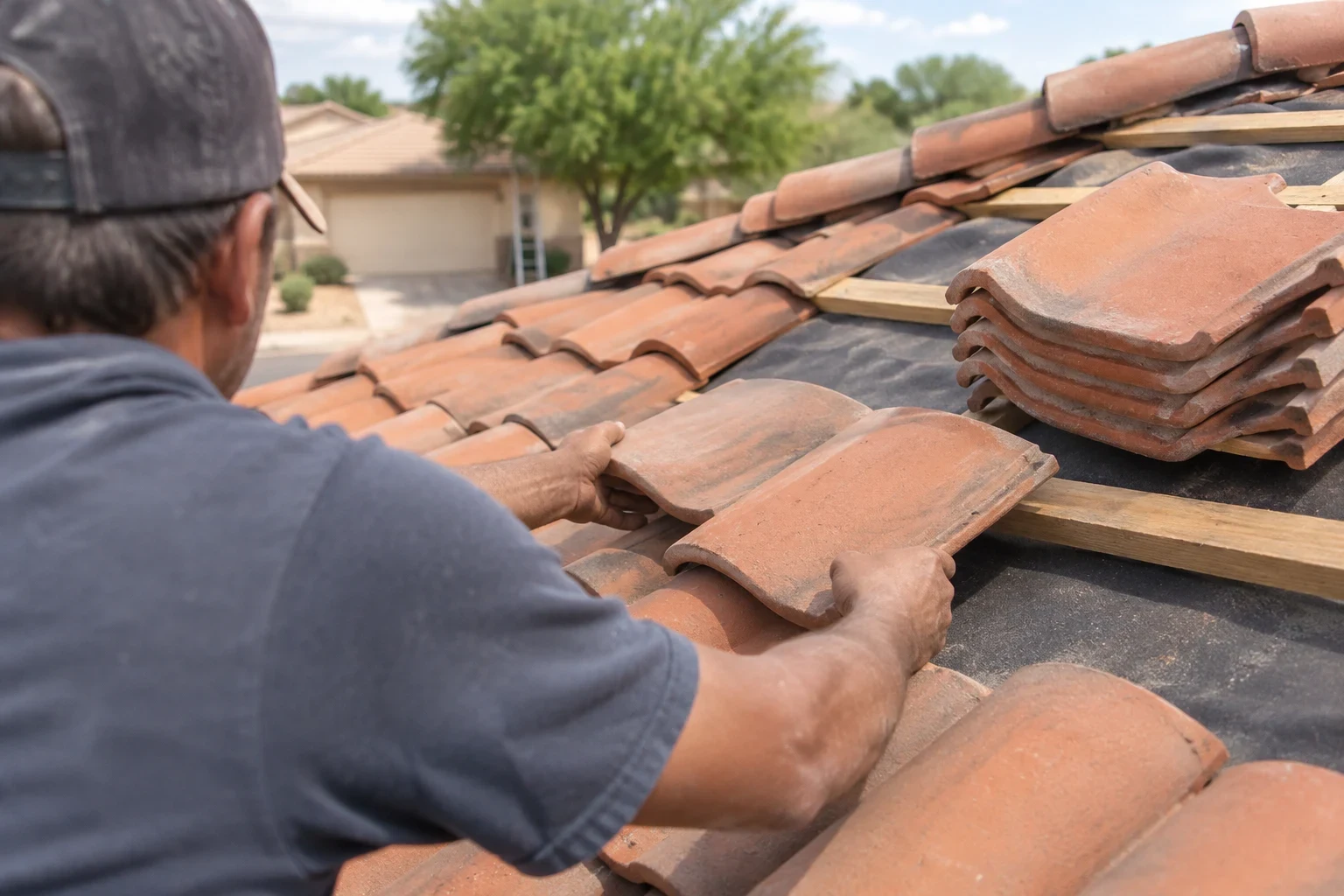
So a large share of the tile jobs we take on are lift-and-relays. The tile is taken up and kept on the roof while we put down fresh underlayment and flashing, and then your own tile goes back, with new pieces filling in for any that are cracked. If the tile is beyond reuse, or you would like a different look, we install a new tile roof instead.
You can't see under your own tile, so we document what we uncover: the old underlayment, the deck, the flashing at walls and vents, then the new layers going down. Those pictures come with your estimate and again when the job is finished.
What our tile roofing work includes
- Underlayment replacement
- We remove the old felt or synthetic layer down to the deck and install new underlayment rated for tile roofs in high heat. Laps run in the right direction at every valley and eave.
- Hand removal and staging
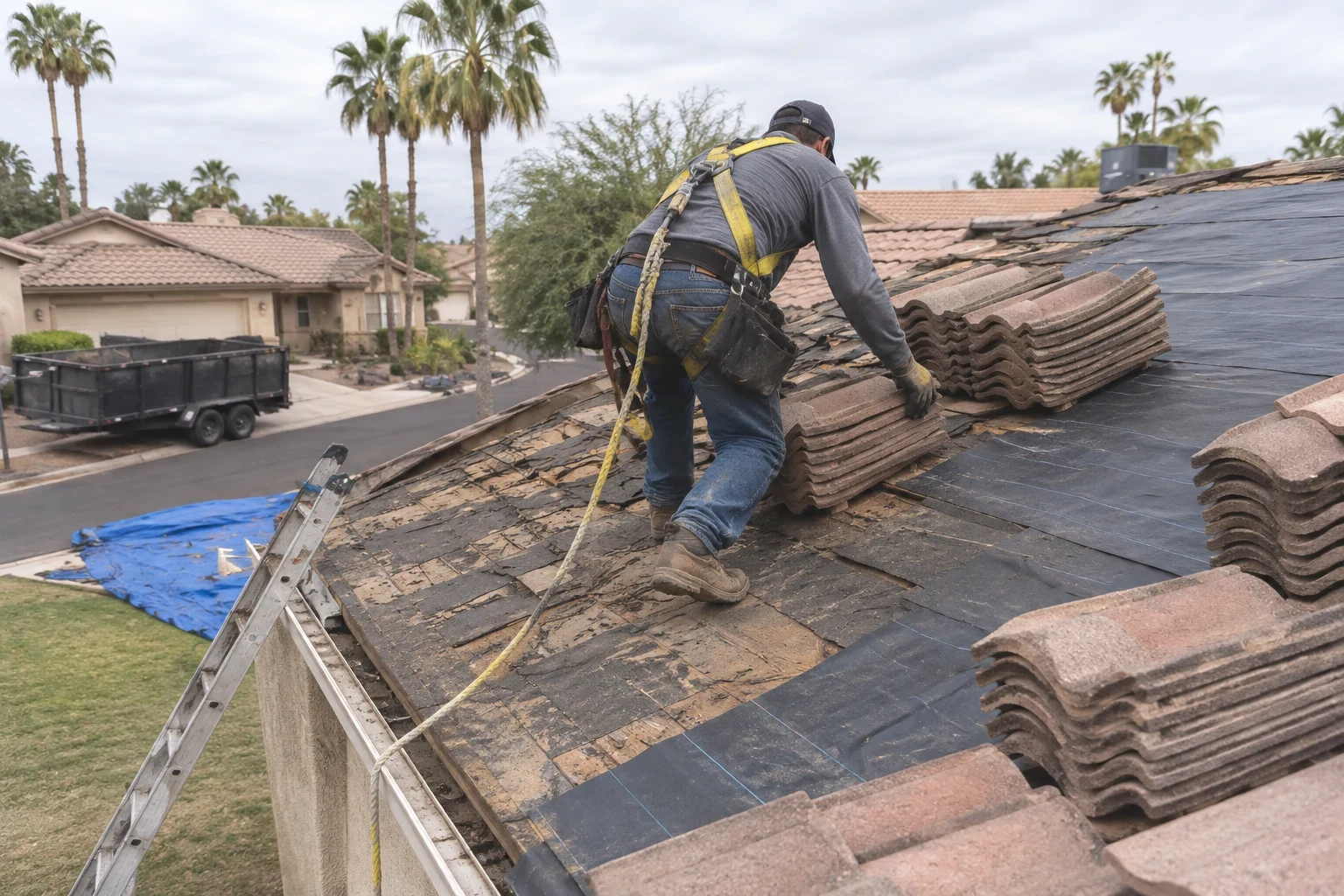
- Each tile is lifted by hand and stacked in small piles across the slopes so the load stays balanced on the framing. Any cracked pieces go in a separate stack you can look at, so nothing is thrown out without you knowing.
- Flashing and valley metal
- Wall flashing, pipe jacks and valley metal are where water gets in first. We replace worn or rusted metal and seal it properly before tile goes back.
- Broken tile replacement and matching
- We source tile in the same profile and as close a color as possible. If an exact match is discontinued, we explain the options, such as moving original tile to the front and placing replacements where they show least.
- Deck repair where needed
- If we find soft or water-stained sheathing, we replace those sections so the new underlayment sits on solid wood.
- New tile roof installation
- For homes moving to tile or replacing worn-out tile, we install new concrete or clay tile with battens, fasteners and ridge details suited to the profile you choose.
Signs your tile roof needs attention
Ceiling stains after monsoon rain
A stain that shows up after a heavy summer storm usually means water got past the tile and through tired underlayment. The tile above it often looks fine.
Cracked or slipped tiles
Foot traffic from other trades, wind and expansion in heat can crack or shift tiles. A slipped tile leaves the underlayment exposed to direct sun.
Brittle underlayment at the eaves
If you can see dark felt at the roof edge and it crumbles or looks shredded, the rest of the layer is likely in similar shape.
Birds or debris under the tile
Nests and leaf buildup in valleys and at eave openings hold moisture and block drainage paths.
Original underlayment, many summers in
When the layer under your tile is the same one the roof was built with, heat has been working on it for a long time. A look now lets you plan the work on your schedule instead of after a leak.
What affects the cost of tile roofing
Tile work is priced by the scope you need, and two roofs of the same size can differ quite a bit. We explain each line on the estimate and show you what we found behind it, so you know why a cost is there before you agree to it.
Roof size and pitch
More squares of roof mean more underlayment and labor. Steeper roofs take longer to stage tile safely.
Tile type and profile
Clay is more fragile to handle than concrete, and S-tile takes more time to set than flat profiles. Hard-to-find colors cost more to replace.
Number of broken tiles
Older or brittle tile breaks more often during removal, so we note its condition up front and plan for replacements.
Condition of the deck and flashing
Rotted sheathing or rusted valley metal adds to the job. We only include it when what we saw on the roof shows it is needed.
Underlayment choice
Heavier, longer-lasting underlayments cost more but hold up better under desert heat. We'll walk you through the options.
How a tile roofing job runs
- 1
Your phone call
Tell us what you're seeing and the age of the roof if you know it. We set a time to come out and look.
- 2
Roof visit and estimate
We walk the tile carefully, lift a few pieces where needed, and photograph the underlayment, flashing and any damage. You get a written estimate, item by item, with those images attached and a plain answer on repair versus a full relay.
- 3
Permit and scheduling
Where the city requires a permit for the scope of work, we pull it. We schedule around heat and the weather, often starting early in the day.
- 4
The work days
Tile comes off in sections, new underlayment and flashing go down, and tile is relaid with new pieces where needed. Each layer is documented before it is covered. Your yard and walkways are protected, and debris goes into a bin each day.
- 5
Walkthrough and final record
We clean up nails and broken tile, walk the finished roof with you if you like, and send the full set of pictures from start to finish.
Common questions about tile roofs
Does my old tile have to be thrown away?
Usually not. Concrete and clay tile that is still sound can be relaid once fresh underlayment is down. Pieces that are cracked get pulled aside, and we fit matching tile in their place.
How do I tell whether I need a full relay or a smaller repair?
When a leak sits in one spot and the underlayment around it still bends without cracking, a targeted repair is often enough. When that layer is brittle from eave to ridge, relaying the whole roof is the fix that lasts. We share the photos from your roof and tell you which way we lean and the reason for it.
Could your crew crack my tile by walking on it?
Careless steps can break tile. Our crew places weight on the lower end of each piece, where it rests on the one below, and stays off the unsupported center. If a tile does break while we are working, we replace it.
My tile color is no longer made. What happens then?
We find the nearest match in profile and color that is still available. A common approach is to gather your original tile onto the slopes seen from the street and set the new pieces on back or tucked-away slopes, where the difference is hard to spot.
How many days does a relay usually take?
It depends mostly on the number of squares and on what the deck looks like once the tile comes up. Your written estimate lists an expected schedule. If sheathing repairs add time, we let you know as soon as we see it.
Can you work on the other roof surfaces on my home?
Yes. Low-slope sections over a patio or addition are covered on our flat roofing and foam roofing pages, and asphalt roofs are covered under shingle roofing.
Find out what's under your tile
Give us a call and tell us what you've noticed. We'll come out, record what we find and give you a written estimate with a straight answer on what your roof needs.