ServicesRoof Repair
Roof Repair in Litchfield Park
We find the real cause of a leak or a failing section, fix it with materials that match your roof, and show you photos of what we found and what we did. Tile, shingle, foam and flat roofs, repaired with care and left clean.
Repair when the roof still has years left
Most roofs that leak do not need replacing. A cracked tile, a lifted piece of flashing, a split seam on a foam or flat roof, or a few shingles that have let go can let water in while the rest of the roof is sound. A good repair fixes that one problem properly and leaves the rest alone.
Desert sun is hard on roofing. Heat and UV dry out underlayment, sealants and coatings faster than many people expect, so the stain on your ceiling often starts somewhere other than directly above it. We trace the water path before we touch anything.
Every visit comes with a picture record: the damage as we found it, the layers underneath once they are opened, and the finished repair. You see what we saw. If the roof is past repairing, we say so plainly and explain why, and our Roof Replacement page covers what that involves.
What a repair visit covers
- Tracing the leak to its source
- We follow stains and water marks back to where water actually enters, checking vents, valleys and wall transitions along the way.
- Tile resets and underlayment patches
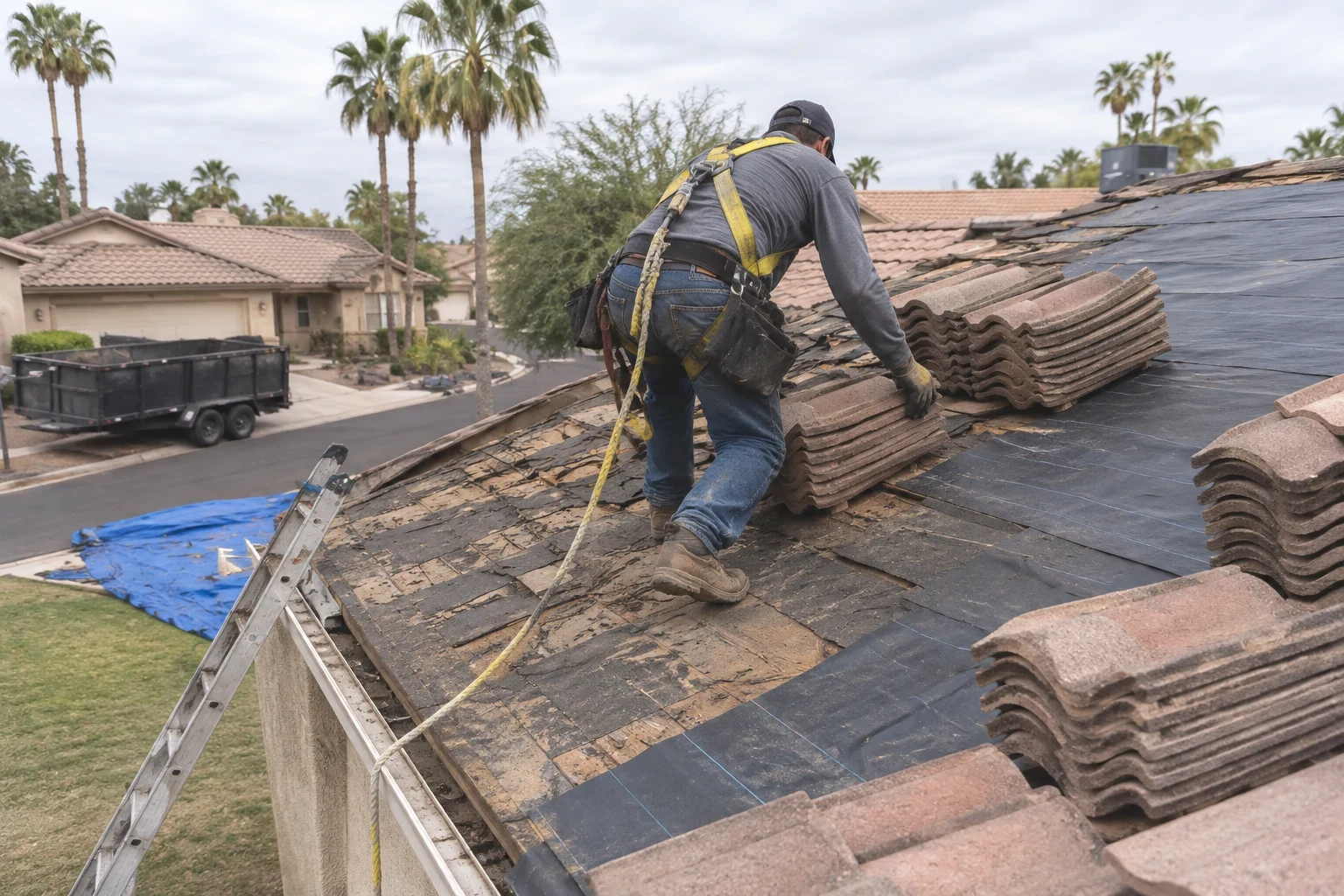
- Broken or slipped concrete and clay tiles are lifted, the underlayment below is checked, and damaged sections are patched before the tiles go back. We match profile and color as closely as available tile allows.
- Shingles and flashing
- Shingles that have curled up, split or gone missing are swapped for new ones and sealed down to the course below. Where flashing meets a wall, chimney or vent, we refasten it or fit new metal rather than burying it under another bead of caulk.
- Foam and flat roof patching
- Punctures, blisters and worn coating are cut out, filled and recoated so the patch sheds water the same way the surrounding roof does.
- Pipe boots and penetrations
- Rubber vent boots crack in strong sun. We replace them and reseal around HVAC stands and other openings in the roof.
- A photo record you keep
- You receive pictures of the before, the opened area and the finished work. They are useful for your own files or when you sell your home.
When a roof is asking for attention
A stain on the ceiling
Discolored drywall, often a tan or brown outline, tells you water is already getting inside. From the yard, the roof above may show nothing wrong at all.
Slipped or cracked tiles
Tiles that have shifted out of line or split leave the underlayment exposed to sun, and exposed underlayment breaks down quickly.
Bare spots on shingles
Once the granule coating wears away, the asphalt underneath dries out and starts to crack.
Soft or blistered foam
A foam roof that feels spongy underfoot or shows bubbles in its coating is usually taking on moisture.
Puddles that stay put up top
When a low-slope roof still holds standing water several days after a rain, the extra weight and steady soaking start to find any weak seam.
Light or damp in the attic
Pinpoints of daylight through the decking or a musty smell point to an opening worth dealing with soon.
What affects the cost of a repair
We give you a written, line-item estimate once we have seen the roof and documented the problem. Nothing is added without a conversation first. A few things move the number more than others.
Roof material
Tile repairs often mean lifting and resetting the tiles around the damage, which takes more labor than replacing a few shingles. Finding a match for an older tile profile can add sourcing time.
What is underneath
If underlayment or decking has rotted, the repair grows to include it. Our pictures show you that condition before we go further.
Number and size of problem areas
One cracked vent boot is a small job. Several leaks across different slopes add up in labor and materials.
Access and pitch
Steep slopes, two-story eaves and narrow side yards need more setup and safety equipment.
Summer timing
In the hottest months we work early in the day, which can spread a larger repair across more than one morning.
How a repair goes
- 1
Start with a phone call
Describe the problem and which room or slope it seems to come from. We will ask what the roof is made of and roughly how old it is, so we bring suitable materials on the first visit.
- 2
On the roof, camera in hand
We walk the roof carefully, stepping where tile and foam can take weight, and capture each problem area in pictures. You get those images along with a written explanation of what we recommend and why.
- 3
The repair itself
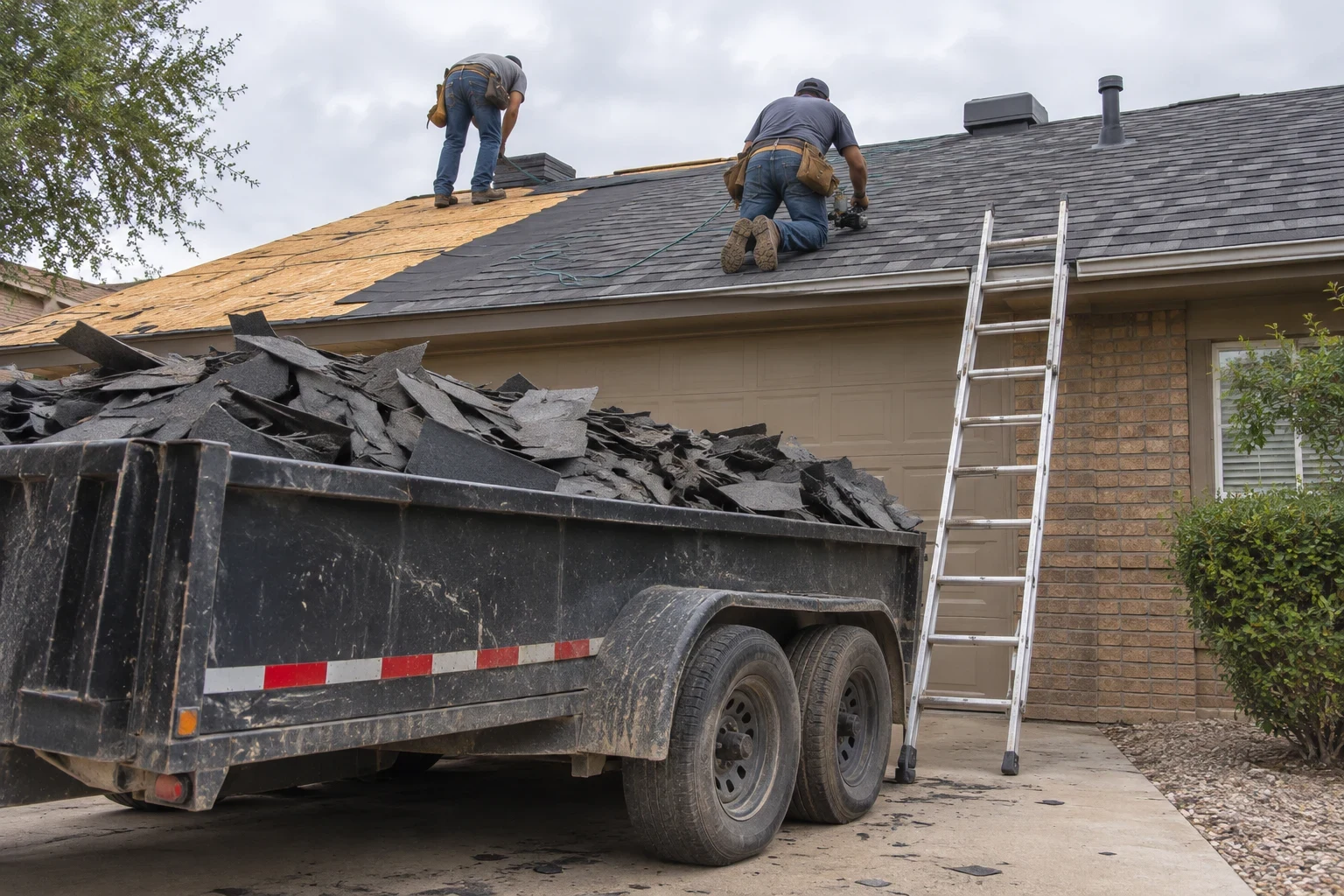
We protect plants and walkways below, open the damaged area, record what is underneath, and make the repair. A single problem area is often a short visit; larger sections take longer, and we tell you ahead of time.
- 4
Cleanup and final pictures
Broken tile, old flashing and debris leave with us. We share the finished images and walk you through them so you know exactly what was done.
Roof repair questions
Can you repair just part of a tile roof?
Yes, and it is often the right call. Clay and concrete tiles last a long time; the underlayment beneath them usually wears out first. We can lift the tiles in the affected area, replace the underlayment there and reset the tiles.
How do I know you are not overselling a replacement?
You see the photos. We show you the damaged area, what we found under it and the condition of the rest of the roof. If a repair will hold, we recommend the repair.
Does homeowners insurance cover roof repair?
That depends on what your policy says and what caused the damage. Insurers usually separate a sudden event from gradual wear, and wear on its own is seldom covered. The pictures and written notes we give you can help when you talk with your insurer, but the adjuster is the one who decides.
Can you match my existing tiles or shingles?
We match type, profile and color as closely as current stock allows. Older tiles and discontinued shingle colors can be hard to find, and new material may look slightly brighter at first. We show you the options before we install anything.
Do I need to be home during the repair?
Not usually. We need access to the yard and sometimes the attic, so we arrange that with you beforehand. The pictures let you see the work even if you were out.
Is it worth repairing an older roof?
Often it is, if the rest of the roof is in fair shape. When damage is widespread or the materials are near the end of their life, repeated repairs cost more than they save, and we will tell you so.
Let us find the source of that leak
Tell us what you are noticing, and we will set a time to come out, document the problem and explain the repair. We work in Litchfield Park, Goodyear, Avondale and the towns nearby.